Every Nepali family knows this scene. It’s 11pm, the flight leaves in two days, and the whole house is gathered around one suitcase, taking things out, putting them back in and arguing over whether it’s under 23 kg. Mum has squeezed in two packets of masala, a jar of achar wrapped in three plastic bags, and a topi “just in case”. The zip is starting to look worried.
You might be off to Sydney for a master’s degree, to Doha for work, or on a month-long trip around Europe. Either way, the bag causes more stress than almost anything else on the list. This guide covers where to buy luggage in Kathmandu, what to check before you pay, the problems people run into most, and everything else you’ll want to sort out before you fly. You can do all of it in one afternoon at City Centre, Kamalpokhari.
Where to Buy Luggage in Kathmandu Without Running All Over Town
Kathmandu has plenty of bag shops, but they’re spread across New Road, Sundhara and dozens of small shopfronts where brand names are hard to trust. At City Centre, two dedicated luggage stores sit one floor apart, so you can compare them properly in a single visit.
Safari: Hard Shell and Soft Luggage on the Second Floor
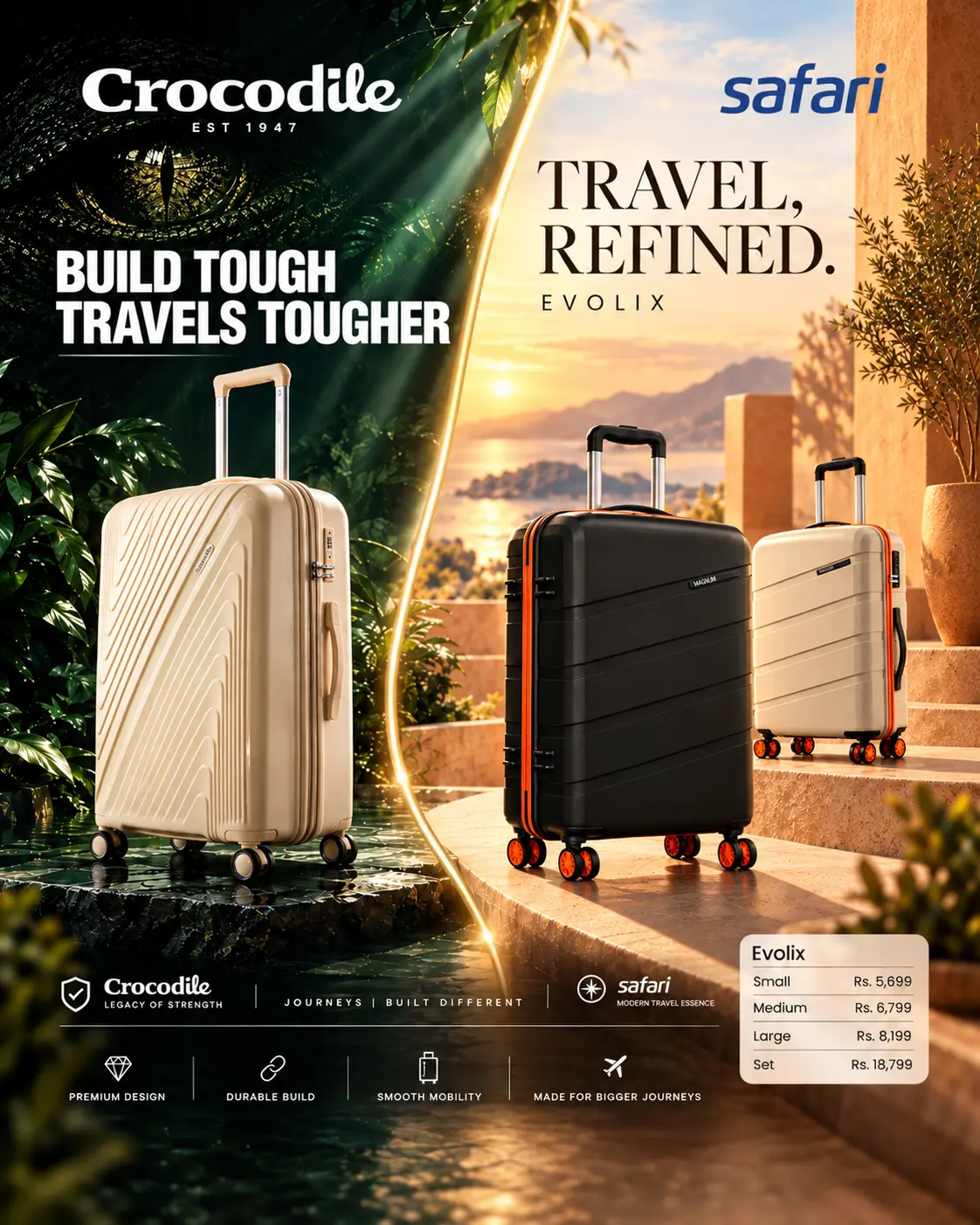
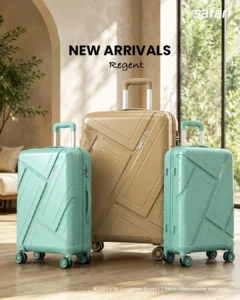
Safari is on the Second Floor at shop S-04 (phone 9805709288). The store stocks both hard and soft luggage. The hard cases are made from polypropylene (PP) and polycarbonate (PC) at Safari’s own factory in Halol, Gujarat. The soft range uses fabric bodies, which suits you if you like to squeeze in “one more thing”.
Safari also leans towards bright colours. That sounds like a small detail until you’re watching forty black suitcases go round the belt at the airport. If you want the backstory, we covered the store’s arrival in our Safari opening post.
Crocodile: Suitcases, Carry-Ons and Travel Bags on the First Floor
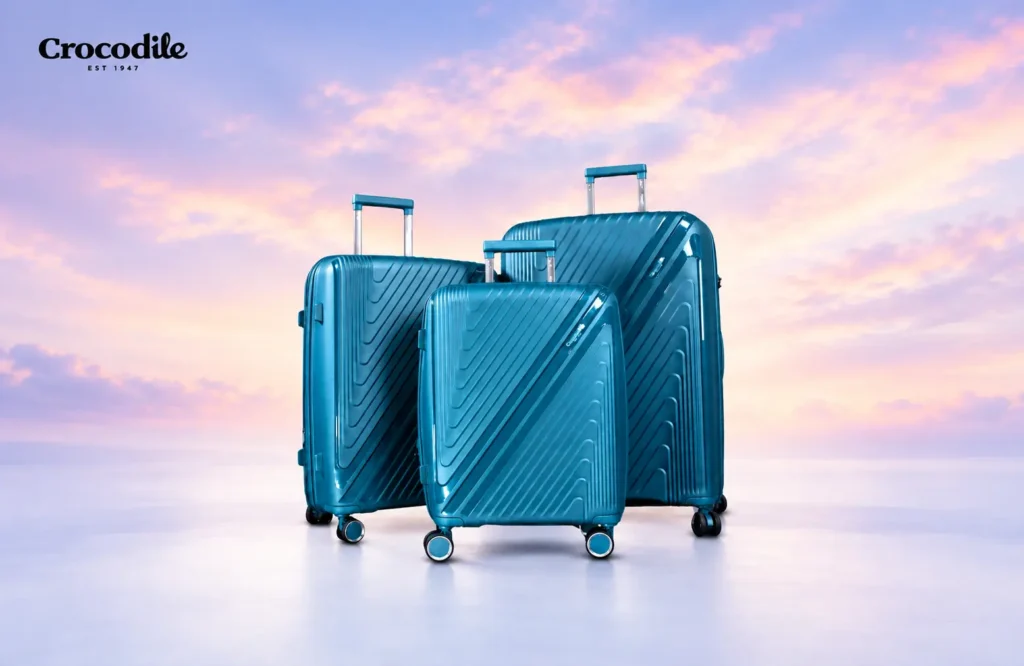
Crocodile is at shop F-21 on the First Floor (phone 9804903026). It carries suitcases, cabin-size carry-ons and softer travel bags. The store page also links to Swiss Military and Arctic Hunter, so ask about those if you need a laptop backpack for the cabin as well as a big case for the hold.
Read more in our Crocodile opening post.
Our tip: Visit both stores before you decide. They’re one escalator ride apart, and seeing the same size in two brands side by side tells you more than any online listing.
The Luggage Problems Everyone Complains About (and How to Dodge Them)
Ask anyone who has flown out of Tribhuvan a few times and you’ll hear the same stories. Most of them come down to a handful of predictable problems.
1. Wheels That Give Up After One Trip
Wheels carry the full weight of the bag, and they take a beating on kerbs, stairs and uneven roads. Cheap wheels crack, wear flat or snap off. Look for four double-spinner wheels that roll quietly and turn smoothly, and push the bag around the shop floor before you pay.
2. The Zip That Bursts at Check-In
Zips hold the whole case shut under pressure, and overpacking is what usually breaks them. Thicker, chunkier zips last longer than thin ones. If you know you overpack (be honest), choose an expandable soft case, or a hard case with clasps instead of a zip.
3. The Wobbly Trolley Handle
Pull the handle all the way up and give it a firm shake. A little movement is normal. If it rattles loudly or sticks halfway, move on to the next model.
4. “Ma’am, Your Bag Is 4 Kg Over”
This is the most common heartbreak at the airport. Many people forget that the suitcase itself counts towards the weight limit. A heavy empty case can use up three or four kilos of your allowance before you’ve packed a single sweater. Ask the staff for the empty weight, and buy a cheap hand-held luggage scale for home.
5. A “Cabin Bag” That Isn’t Really Cabin Size
A bag labelled as cabin size can still fail an airline’s size check. Measure the outside dimensions including the wheels and handle, then compare them with your airline’s limits before you buy.
6. Every Black Suitcase Looks the Same
You land after 20 hours of travel, exhausted, and you can’t tell which bag is yours. A bright shell, a coloured strap or a distinctive tag fixes this for the price of a cup of tea.
7. Copies Sold as the Real Thing
Fake “branded” luggage is everywhere, and it never comes with a warranty. Buying from a brand’s own store means you know what you’re getting and where to take the bag if something breaks. Always ask what the warranty covers and keep the bill.
8. It Looked Different in the Photo
Online listings rarely show how thick the shell is, how the wheels turn or how much the empty bag weighs. For something you’ll trust with everything you own for the next two years, see it in person first.
Hard Shell or Soft Bag? Pick Based on Your Trip
Choose hard shell if you’re checking in fragile items (yes, the achar counts), flying long-haul with several connections, or want a case that’s easy to wipe clean. Polycarbonate flexes under impact rather than cracking. Polypropylene tends to be lighter and cheaper.
Choose soft luggage if you need a little extra room, like outside pockets for documents, or are travelling by road. Bus roof racks and jeep boots are kinder to fabric than to shells.
Many people moving abroad buy one of each: a large hard case for the hold and a soft cabin bag or backpack to carry on.
What Size Suitcase Do You Need for 23 Kg?
The 23 kg figure is a weight limit, not a suitcase size, which confuses a lot of people. As a rough guide:
| Size | Typical height | Best for |
|---|---|---|
| Cabin | Around 20 inches (55 cm) | Carry-on bag, usually around 7 kg |
| Medium | 24–26 inches | Trips of one to two weeks |
| Large | 27–29 inches (around 70–75 cm) | Moving abroad, long trips, a full 23 kg |
If you’re flying on a student fare, check your ticket carefully. Some full-service airlines give students two checked bags of 23 kg each. That usually means two large cases rather than one oversized one, because a single bag packed to 32 kg will often be refused or charged. Your ticket and the airline’s website always have the final say.
The Two-Minute Test Before You Pay
Do this in the store. Staff are used to it, so don’t feel awkward.
- Roll the bag in a figure of eight. All four wheels should turn freely and quietly.
- Pull the handle up and down three times, then shake it.
- Open and close the zip around every corner. It shouldn’t catch.
- Press the middle of a hard shell. It should flex and spring back, not dent.
- Check the inside: straps, a divider and a zipped pocket make packing much easier.
- Ask about the empty weight, the warranty and whether the lock is TSA-approved (useful if you’re flying to the US).
What to Buy Before Going Abroad from Nepal: Your Full Checklist
The suitcase is only half the job. Here’s the rest of the list, sorted by floor so you can do it in one visit.
Shoes You Can Walk 20,000 Steps In
New city, new job, no car yet. You’ll be walking more than you expect. Skechers (First Floor, F-32-33) is the comfort pick. Erke and Lee | New Balance (Ground Floor, G-23) cover sporty, everyday pairs. Break new shoes in for a week before you fly, not on the first day of your trip. Our guide to the top branded shoes in Nepal goes into more detail.
Warm Layers for a Colder Country
Winter in Toronto or Tokyo is a different thing from a Kathmandu winter. Sonam Gear on the Third Floor (T-09/T-10) is a homegrown Nepali brand that has been running since 2011, and it makes trekking jackets, pants and activewear. Down jackets also compress well, which saves suitcase space.
Everyday Clothes That Pack Small
Pack basics that you can mix and match, rather than a separate outfit for every day. JeansWest (Second Floor) and Studio 9 (Second Floor, S-03) are good places to stock up. Browse the full list on our branded clothing stores page.
Laptop, Phone and the Right Charger
Buy your laptop here, where you can get after-sales support, and get the setup sorted before you leave. Oliz Store (Ground Floor, G-5), Pranish Store (Second Floor, S-27-28) and Bigbyte IT World (First Floor, F-1) are all in the Electronics section. Pick up a universal travel adapter while you’re there. One rule that catches people out every week: power banks go in your cabin bag, never in checked luggage. For more help, see buying phones and laptops in Kathmandu.
A Little Piece of Home for the People Waiting
A relative’s family hosting you for the first week? Flatmates you haven’t met yet? A small gift from Nepal goes a long way. Try Gift House Nepal (First Floor, F-22) and The Gift Shop (Second Floor, S-20), or see our list of where to buy gifts in Kathmandu.
The Part Nobody Puts on the List
The shopping is the easy part. The harder part is the last few weeks before you leave: Ama checking for the fifth time whether you’ve packed your medicine, Buwa pretending he isn’t emotional, and a younger sibling quietly claiming your room.
So make the shopping trip a family outing. Pick the suitcase together, let everyone argue about the colour, then sit down for a meal at the food court afterwards. Months later, when you’re unpacking in a flat 8,000 km away, that afternoon is what you’ll remember.
Plan Your Travel Shopping Day at City Centre
Luggage, shoes, jackets, tech and gifts are all under one roof at Pashupati Sadak, Kamalpokhari (view on Google Maps). Browse the full store directory before you come, make a list, and give yourself an unhurried afternoon. That way, the 11pm packing session is the only stressful part left.